The numbers are stark. NVIDIA, the undisputed sovereign of the AI hardware throne, saw its stock shed 18% from its June peak, settling at $195. Smart money is net short—a rare alignment of institutional caution. Retail, meanwhile, clings to calls, sending the put/call volume ratio to 0.48, a flag of exuberance. As a token fund manager who cut his teeth auditing smart contracts in 2017, I've seen this pattern before. The last time retail euphoria collided with institutional skepticism, we were knee-deep in the 2021 NFT mania, watching floor prices crumble while the crowd still chanted "diamond hands."
Tracing the static in the protocol’s genesis block—the static here is the growing dissonance between AI's promise and its realized returns. The catalyst? OpenAI's delayed IPO, a signal that even the most hyped AI venture struggles to justify its valuation to private investors. Meanwhile, the H100 rental market, once a proxy for infinite demand, now whispers of "negative ROI." For those of us who lived through the Terra collapse, the analogy is uncomfortable: a narrative built on belief rather than cash flows.
Context: NVIDIA's dominion rests on a triad—Blackwell architecture, CUDA's moat, and an almost monopolistic grip on the supply chain (CoWoS, HBM4, TSMC's advanced nodes). Yet the market's attention is shifting. AMD and Micron have surged over 100% each this year as capital rotates away from the king. The rotation is not about inferior technology; it's about fear. Fear that the AI capital expenditure cycle, driven by a handful of hyperscalers—Microsoft, Meta, Amazon, Alphabet—is a Ponzi of productivity, not a sustainable investment. These four clients account for roughly 60% of NVIDIA's revenue. That is not a customer base; it is a hostage situation.
During my 2020 research on DeFi yield stabilization, I learned that yields do not vanish; they merely change form. The same logic applies here: AI ROI is real, but it is morphing from training (where NVIDIA dominates) to inference (where ASICs and edge devices compete). The market is pricing in a fear that NVIDIA's moat is thinning just as the technology matures. And the China story? Washington's decision to license H20 chip exports is a bandage, not a cure. The H20 is deliberately gimped, achieving only 20-30% of H100's performance. It opens the door to Chinese clients reliant on software ecosystems, but it also accelerates Beijing's push for domestic alternatives like Huawei's Ascend. In my 2021 NFT report, I coined the phrase "The image is not the asset; the belief is." Here, the chip is not the asset; the belief in continued exponential demand is. That belief is fraying.
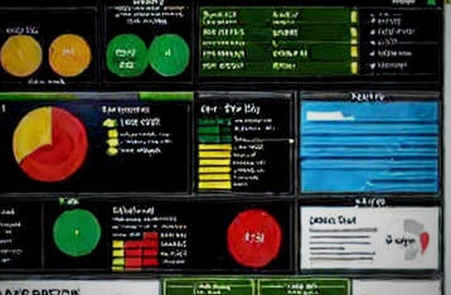
Core analysis: The technical picture mirrors the sentiment. NVIDIA's 200-day moving average sits near $190, a level that has acted as support twice this year. The Chaikin Money Flow (CMF) indicator turned negative in mid-June, confirming net capital outflow. The Bollinger Bands have widened, signaling increased volatility. Combined with a drop in the put/call ratio to 0.48, the setup resembles a coiled spring—but directionally ambiguous. Smart money's net short position (often hedged via options) suggests they anticipate a catalyst-driven move lower. That catalyst could be the upcoming earnings calls from Microsoft, Meta, and Amazon in late July. If any one of these hyperscalers dials back its AI capital expenditure guidance, or even hints at "optimization" in existing GPU deployments, the house of cards could tremble.
But here's where the blockchain angle sharpens. As a token fund manager, I monitor not just NVIDIA's revenue but the health of decentralized compute networks—Render, Akash, and Bittensor, among others. These protocols aggregate GPU power from idle miners and data centers, offering a spot market for AI inference. Value flows where attention decides to rest, and attention is slowly moving from centralized cloud vendors to permissionless compute markets. For example, the recent spike in compute demand for open-source model fine-tuning has driven usage on Akash to all-time highs. Yet these networks are still a rounding error compared to AWS or Azure. The question is whether NVIDIA's capacity constraints (which keep prices high) will push cost-sensitive AI startups toward decentralized alternatives. I saw this dynamic play out in 2022 when Ethereum's transition to proof-of-stake stranded thousands of GPUs, and decentralized render networks absorbed the surplus. Now, the surplus is being created by hyperscaler over-ordering.
The contrarian angle: Most analysis assumes NVIDIA's dominance is unassailable or that it will inevitably decline. Both are oversimplifications. The counter-intuitive truth is that the AI narrative is not dead—it is entering a phase where decentralized infrastructure becomes the last hedge against centralized bottlenecks. If the H20 license fails to reignite China revenue, Chinese AI firms will be forced to use unregulated, peer-to-peer GPU rental markets (often crypto-based) to access latest-generation hardware. This would create a parallel economy beyond sanctions. I am not advocating sovereignty, but witnessing the seeds of a new value chain. Additionally, the emerging field of crypto-based AI agents (autonomous protocol managers) could become a new demand pool for GPU compute that is indifferent to corporate ROI—their existence depends purely on token incentives. The market misprices the latency between these trends.
Takeaway: The next catalyst for NVIDIA's stock is not the July earnings print. It is the first credible signal that a decentralized compute network has enabled a profitable AI application that a centralized cloud could not serve cheaper. Stability is the quiet architecture of trust, and trust in hyperscaler dominance is eroding. Watch Akash's monthly revenue growth and Bittensor's subnet activity as leading indicators. If they accelerate, the narrative leadership may shift from the chip supplier to the network that wields it.