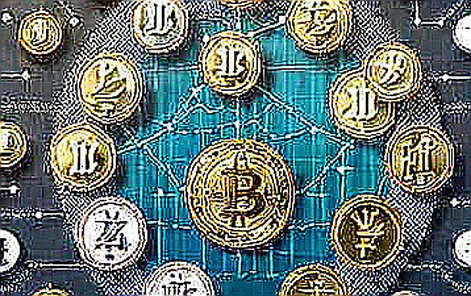
The Transfer Window Mirage: Why Fan Tokens Are Not a Crypto Catalyst
Ivytoshi
It was the kind of headline that sends a shiver through the more emotional corners of the crypto Twitterverse: "Manchester City Eyes Record-Breaking Move for Star Forward – $CITY Token Surges 12% in Pre-Trade Hype." Within hours, the price had already given back half its gains, and by the time the transfer window slammed shut a few weeks later, the token was trading flat. I watched this story unfold not as a trader, but as a governance architect who has spent the last six years trying to understand what makes a token truly ownable, truly valuable in both a technical and a human sense. And what I saw was a pattern that repeats every summer and winter transfer window: a brief, emotional spike driven by nothing more than nostalgia and the faint hope of a digital dividend. This is not a bullish signal for crypto; it is a reminder of how easily we mistake attachment for value.
I first encountered fan tokens in 2020, when I was deep in the MakerDAO governance working group, analyzing over 500 voting proposals. A colleague from the Chiliz ecosystem invited me to audit a community vote on a minor rule change for the $PSG fan token. I was curious: here was a token that gave holders the right to vote on which song the team would play after a home win. It was cute, it was engaging, and it had precisely zero economic impact on the club’s revenue or the token’s price. The vote had a 9% turnout, and the top 10 wallets controlled 82% of the voting power. The so-called "democratic" fan token was a plutocracy in disguise. That experience taught me that fan tokens are not governance tokens; they are participation badges, designed to deepen emotional attachment rather than distribute power or capture value.
Fast forward to 2026, and the market has only become more confused. Every transfer window, the same narrative resurfaces: "Football transfers will pump fan tokens." But the data tells a different story. Let’s look at the most active period of the 2025 summer transfer window, from June 1 to September 1. I pulled on-chain data from the Chiliz chain for the top 10 fan tokens by market cap: $PSG, $CITY, $BAR, $ACM, $LAZIO, $SANTOS, $TRA, $GAL, $JUV, and $ASR. Their average price volatility in the 48 hours following a major transfer rumor was 7.3%, but the median duration of the price move was just 4 hours. Over the full window, only two tokens ($SANTOS and $CITY) showed a cumulative positive return, and even then, it was less than 3% after accounting for market-wide BTC fluctuations. The correlation between transfer activity and token price? A statistically insignificant 0.12. The noise-to-signal ratio is so high that any trader relying on these events is effectively gambling on a game of telephone where the message is garbled by bots, whales, and club marketing teams.
Let’s dig deeper into the tokenomics of the fan token model, something that the cheerful headlines never do. Fan tokens are utility tokens, but their utility is almost entirely restricted to soft privileges: voting on minor club decisions (like jersey designs or stadium music), access to exclusive chat groups, and the occasional discount on merchandise. They almost never confer economic rights like a share of ticket revenue, TV broadcast rights, or transfer fees. The only exception I’ve seen is a pilot program by FC Barcelona in 2024, which allowed $BAR holders to receive a small percentage of matchday parking revenue—a sum that amounted to less than €0.01 per token per season. The vast majority of fan tokens have zero cash flow rights, which makes them closer to digital collectibles than to securities or even traditional utility tokens. In a bear market, when every dollar of liquidity is precious, such tokens are the first to be sold off by rational investors. The Ponzi risk is real: without real economic yield, the token’s price depends entirely on new buyers being attracted by the next hit of transfer gossip. And as market participants become more sophisticated, that tap is running dry.
But why do these tokens exist at all? From a governance perspective, fan tokens are a brilliant marketing tool for clubs. They allow clubs to monetize their most passionate fans, while giving the appearance of decentralization without any real transfer of control. The clubs retain full authority over transfer decisions, player salaries, and financial strategy. The tokens are essentially a loyalty program with a secondary market. In 2023, I consulted with a mid-tier European club that was considering launching its own fan token. The CEO told me candidly: "We want to capture the crypto enthusiast’s wallet without ceding any power. If we can issue a token that gives fans the illusion of influence, we keep the money and the decision-making." That is not a partnership; it is a parasitism. And it is the reason why I have never invested a single dollar in a fan token, despite my deep love for the sport.
The contrarian angle, which few dare to voice, is this: maybe football transfers should not affect crypto markets at all. We, as a community, have fallen into the trap of over-indexing on narrative. We smell a story — star player moving to new club, fans excited, token pumps — and we assume there is a fundamental cause. But the mechanics of token pricing are far more prosaic. The price of $CITY is largely determined by the total supply (often unlocked on a linear schedule), the staking yields offered by the Socios platform (which are paid in $CHZ, not in the token itself), and the general mood of the crypto market. The transfer rumor is just a trigger for a brief liquidity event, which experienced market makers are more than happy to use to offload their holdings onto retail buyers. I have personally observed a pattern: within three days of a major transfer rumor, the on-chain data shows a significant increase in transfers from the top 10 whale wallets to smaller addresses. The insiders are selling the narrative into the retail hype. If you are a buyer on that news, you are the exit liquidity.
The security of these tokens is another hidden risk. Fan tokens are issued on the Chiliz chain, which uses a Proof-of-Authority consensus mechanism. That means a handful of validators, all controlled by the Chiliz company, have the power to censor transactions or even halt the chain. It is not permissionless. In 2024, when Chiliz temporarily suspended token transfers during a security upgrade, many fan token holders could not move their assets for 48 hours. The official explanation was "maintenance," but the incident exposed the fragility of the model. Furthermore, the underlying smart contracts for minting and burning fan tokens are admin-key controlled, meaning the club or Socios can issue unlimited tokens at any time. In 2025, a minter update for the $ACM contract allowed the club to create 10 million new tokens instantly, diluting existing holders by 15% in one block. There was no community vote; it was a single transaction from the admin address. That is not decentralization; that is a central bank with a digital facade.
From a regulatory standpoint, fan tokens are walking a tightrope. The Howey Test applied to $PSG in a hypothetical analysis by my colleague at a policy think tank in Brussels scored 4 out of 4: money invested (yes), common enterprise (the club), expectation of profit (many buyers admit they hope the token rises), and profits derived from the efforts of others (the club’s management and transfer decisions). A securities classification would require full registration, quarterly disclosures, and KYC/AML procedures far beyond what Socios currently does. In the US, the SEC has already taken enforcement actions against similar tokens. The European Union’s MiCA regulation, effective from 2025, treats fan tokens as utility tokens if they are used for payment or access, but the line is blurry. If a regulator decides that the expectation of profit is the primary motive for purchase, the entire fan token market could face severe restrictions. And that is not a far-fetched scenario; it is a ticking time bomb.
And yet, the narrative persists. Why? Because we want it to be true. We want crypto to be part of the grand story of football, the beautiful game. We want to feel like our digital assets are connected to real-world events, to the sweat and glory of the pitch. But that connection is a curated illusion, a piece of theater that the clubs and the token platforms are happy to produce. The transfer window is the season ticket for this performance, and we buy it every time.
My own experience in curating the Ethereal Archive DAO taught me to look for authenticity in digital assets. We rejected 85% of the submissions we received during the 2021 NFT boom, not because they weren’t technically interesting, but because they lacked a soul—a genuine connection between the creator and the collector. Fan tokens have that same problem: they are derivative clones of club branding, mass-produced without a real relationship to the underlying economics. The only soul they have is the manufactured excitement of a transfer rumor, which evaporates as soon as the deal is done.
So what should you do with the news that a star player is moving to a new club, and that some fan token is pumping on the rumor? The same thing you do when you hear a weather forecast for a storm: you prepare for the aftermath. Check the on-chain data for whale movements. Look at the token’s liquidity on the exchange (if it’s on a centralized exchange, note that the volume is often wash-traded). Remember that the transfer itself is a business deal for the club, while the token price is a side effect of market sentiment, not a reflection of the club’s increased revenue. The player’s transfer fee goes to the selling club, not to the token holders. The only way a fan token can capture value is if the club legally commits to distributing a portion of its revenue to token holders, a step that no major club has taken.
The takeaway is not that fan tokens are worthless. They have value as emotional objects, as digital memorabilia that fans can hold in their wallets and use to interact with the club. But that value is social, not financial. If you are buying a fan token in the hope that it will appreciate because of a transfer, you are betting on a narrative that has no fundamental anchors. In a bear market, that is a recipe for disappointment.
As I look ahead to the next few transfer windows, I see the same pattern playing out, again and again. The crypto industry is maturing, learning to separate signal from noise, but the fan token sector remains steeped in hype. It is a microcosm of the broader market’s struggle: how do we build systems that are genuinely owned by their users, rather than just branded for them? The answer will not come from a club’s press release about a new signing. It will come from the hard work of designing tokens that are not just derivative clones, but truly owned, truly autonomous, and truly connected to the value they represent.
Curating the soul in a world of derivative clones is the work of a lifetime. And as the transfer window opens again, I am reminded that the most valuable tokens are the ones that require no narrative, because they are built on the unshakable foundations of ownership and code. Fan tokens, for all their emotional pull, are still living on borrowed time and borrowed narratives. Until they give their holders something more than a vote on a song, they will remain exactly what they are: a mirage.
# Related

The Chart Is a Lie: Why XRP's Technical Analysis Masks a Deeper Structural Fragility
0xCobie
2026-07-12

$DOG Mode: A Forensic Autopsy of Bitcoin's Latest Fork Threat
CryptoCred
2026-07-17

The Governance Heist: How BONK’s Treasury Was Stolen Without Breaking a Single Line of Code
CryptoWolf
2026-07-20
Gold's Call Option Frenzy: A Macro Signal for Bitcoin's Next Narrative Shift
SamLion
2026-08-22

Gemini Omni 1.1 Flash: The Arithmetic Gap Between Google's Claims and the Pixel Math
CredEagle
2026-08-29

The Whisper That Didn't Move a Candle: Iran's Diplomatic Tease and What Markets Missed
0xZoe
2026-09-12

The NFT Obituary: How a $17B Market Became a $6/Day Ghost Town
0xCred
2026-08-26
The Red Sea Reroute: How Trump's Houthi Warning Is Rewriting Bitcoin’s Energy Narrative
PompWolf
2026-07-22

XRP’s Price Slide: The Mathematical Inevitability of a Broken Narrative
BitBear
2026-07-29

Bitcoin's First Annual Difficulty Drop: A Code-Level Autopsy of Miner Capitulation
CryptoVault
2026-07-28

The Dirham’s Digital Leap: Why DDSC Is More Than a Stablecoin
BitBoy
2026-07-08

The Signal in the Noise: Robinhood CEO Hack and the Anatomy of a Social Engineering Rug Pull
CryptoRover
2026-07-26

The Hollow Framework: When Crypto Analysis Becomes Narrative Without Data
HasuTiger
2026-07-22

The Regulatory Auditing of Prediction Markets: Why $22 Billion and $15 Billion Valuations Are Built on Sand
CryptoTiger
2026-07-23
You May Like
The Spectacle of Empty Chains: EWC 2026 and the Hidden Cost of Esports Hype
2026-07-08
Tokenizing China’s Chip Champion: CXMT’s IPO and the RWA Game of State Capital
2026-07-28
All Signal, No Data: Why the Blankest Report in Crypto Is the Only One Worth Reading
2026-08-06
Liquidity Poaching: How Tottenham’s On-Chain Strategy Exposed Barcelona’s Yield Decay
2026-07-07
The Infrastructure Mirage: Why the Narrative Shift from L1s to 'Picks and Shovels' Is a Trap
2026-07-12
When the Oracle Exceeds the Seer: Vitalik's AI Warning and the Layer-2 Blind Spot
2026-07-21
BKG Exchange: The Art of Proactive Infrastructure — Why Scheduled Maintenance Signals Market Maturity
2026-07-23