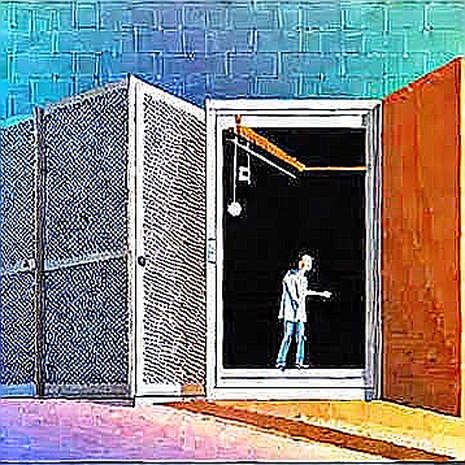
The Geopolitical Stress-Test of Supply Chains: When Trade Leverage Meets the Oracle Problem
Wootoshi
A social media post. A single data point. And a stark observation of systemic fragility. On August 25th, a statement targeting Canadian leadership surfaced on Truth Social, framing the US-Canada relationship as a one-sided dependency. The rhetoric included a claim that Canada's unemployment rate had hit 10% and was rising. Official data from Statistics Canada showed a figure closer to 6.4%. The gap is not a statistical error. It is a narrative construct.
I have spent years auditing the architecture of value in decentralized systems. The 2017 ICO cycle taught me to cross-reference whitepaper claims against on-chain liquidity. The 2022 Terra collapse taught me to reverse-engineer the failure of algorithmic pegs. In this report, I apply the same deductive framework to a different asset class: geopolitical leverage. The goal is not to analyze politics. The goal is to stress-test the integrity of a trade relationship and extract the forward-looking market signals. The core finding: the weaponization of a supply chain is an architectural variable that the market is currently underpricing.
The political rhetoric focuses on the concept of unfair advantage. The analysis is an architecture of dependency. Canada is the world's fourth-largest oil producer, yet its export infrastructure is a bottleneck. Approximately 97% of its crude oil exports flow to the US due to a lack of alternative pipeline capacity. The US controls the transit corridor. This is a unilateral control point, a single point of failure in a trade network. The statement leverages this dependency by threatening consequences, an act of brinkmanship designed to create economic pressure without specifying a clear red line.
The deeper structural truth is that the trade relationship is not a one-way street. It is a mesh of high-latency interdependencies. US crude imports are about 60% Canadian. Canada is the top export market for 34 US states. The bilateral trade volume exceeds 700 billion dollars annually. The US relies on Canadian potassium (over 80% of imports), uranium (about 25% of nuclear fuel), and electricity for several northern states. The data creates a nuanced picture. The dependency is bilateral, though it is asymmetric. The US holds the transit key for energy; Canada holds the key for critical minerals. The threat of economic consequences is, in this context, a form of leverage, but its application could trigger a cascading failure in US energy prices.
The Contrarian Angle is the market's perception of a decoupling thesis. The consensus view treats this as a political event with localized impact. The quantitative analysis suggests a different narrative. The system is in a state of cohesion, not decoupling. The cost of full separation is prohibitive for both parties. The real risk is not a hard break. The real risk is the introduction of unpredictable, unilateral variables into a highly optimized supply chain. This is a scenario where the supply chain itself becomes the negotiation vector. The leverage of Canada is often overlooked. The operational impact of a restriction on mineral exports would be immediate, triggering a shock in the agricultural and nuclear sectors. The design of the system has a built-in mutual assured destruction mechanism. The market is currently treating the social media statement as a political signal. The data suggests it should be treated as a stress-test of a critical infrastructure.
The final takeaway for macro observers is to focus on the infrastructure. The period of tension will resolve through negotiation, not through conflict. However, the long-term structural signal is the acceleration of energy export diversification. The completion of the Trans Mountain pipeline expansion opens a direct route for Canadian crude to Asia. The cycle is shifting. The core metric of this system's health is not the price of oil, but the velocity of its alternative routes. The ultimate metric of a robust system is its survival. Survival is the ultimate metric of a robust system. The question is not whether this relationship survives, but whether the narrative of dominance can adapt to the data of interdependence. The architecture of the next cycle is being built in the latency of these negotiations.
# Related

The Shared Settlement Mirage: Why the Ethereum Foundation’s zkSync Denial Exposes a Deeper Scaling Crisis
Credtoshi
2026-07-23

Liquid Staking Derivatives Are Rewriting Ethereum's Power Structure—and Nobody Is Paying Attention
CoinChain
2026-09-06

The Oracle Singularity: Why LayerZero's $292M Blind Spot Changes the Cross-Chain Game
Alextoshi
2026-07-10
Leveraged Tokens in 2026: When Liquidity and Brand Silence the Performance Narrative
ZoeTiger
2026-07-30

$DOG Mode: A Forensic Autopsy of Bitcoin's Latest Fork Threat
CryptoCred
2026-07-17

The 89 Billion Dollar Band-Aid: How China’s ETF Injection Masks a $500 Billion Miner Liquidity Bomb
CryptoSignal
2026-07-26

The Tariff Tide: How Trump's Trade War Reshapes the Moral Economy of Blockchain
CryptoPanda
2026-07-22

BOJ’s Hawkish Pivot: The Hidden Liquidity Bomb for Crypto Markets
CryptoLark
2026-08-19

The NeoCloud Mirage: When a Headline Masks the Void
CryptoLark
2026-08-13

The $28 Buy Rating on Strive Hides a Structural Weakness
0xHasu
2026-08-05

World Cup Prediction Markets: The Autopsy of a Narrative That Felt Every Minute of Its Own Hype
CryptoTiger
2026-07-10

The Bull Market Is Hiding a Structural Rot: What the Options Chain Is Telling You That the Hype Cycle Won't
CredWhale
2026-09-07

South Korea’s Rate Hike Signal: The Kimchi Premium Is About to Crack
CryptoAlpha
2026-07-09

The Telegram Trap: How Russia Turned Anti-Terrorism Law Into a Weapon Against Encryption
CryptoSignal
2026-07-30
You May Like

Lobster’s 14.45% Whale Move Is Not News. It’s a Structural Confession.
2026-08-29
Elysium's Structural Silence: The Hyperliquid L2 That Raises More Questions Than It Answers
2026-08-25
A Thousand-Dollar Question: What Zcash's Sudden Surge Really Tells Us About Privacy's Price
2026-09-05
The Polish Tax Anomaly: Tracing the Ghost in the Gas Logs of Digital Sovereignty
2026-07-22
Airbnb CEO Talks RWA Tokenization: Why Executive Chatter Is Not On-Chain Signal
2026-07-14
Oil Ceasefire and Crypto's Liquidity Paradox: A Macro Watcher's Take
2026-07-28
The Silence of the Whale: MicroStrategy's Pause and the Unmapped Ocean of Institutional Liquidity
2026-07-27