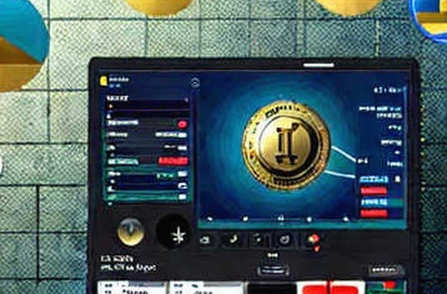
The spec sheet landed on a Tuesday in September, and the first thing I did — as I do with every hardware announcement that arrives during a bull market — was look for the part the press release hoped I would skip. DCENT X: a 2.4-inch AMOLED touchscreen, single-finger biometric authentication, compatibility with more than one hundred chains and ten thousand tokens. A tagline reading "Beyond Storage." A physical Recovery Card. An enterprise product with multi-level approvals. And then, four lines further down, the detail that actually mattered: a fingerprint sensor. The company's first biometric wallet shipped with one in 2019. Which means the headline feature of a 2024 rebrand is a six-year-old sensor wearing a brighter screen.
That is not the criticism it sounds like. It is the most revealing fact in the announcement, and it took me three passes through the material to understand why.
Eight weeks before that document arrived, I sat in a co-working space in Indiranagar with eleven builders and one very patient product designer, and a woman at the end of the table described teaching her mother to write twelve words onto a piece of paper and hide it behind a photograph frame. The room went quiet in the particular way rooms go quiet when everyone recognizes the same wound. Nine of the eleven people there had personally lost access to funds they could never recover, or watched someone they loved lose access. Not one of them had lost funds to a broken elliptic curve. The cryptography worked perfectly. The humans did not.
The hardware wallet industry has spent a decade solving key generation and roughly no time solving the person standing at the end of it. What I read in DCENT's spec sheet was a Korean company betting that the next phase of this category will be won not by whoever generates keys most elegantly, but by whoever makes the human signing gesture survivable — and then quietly betting the opposite, by not telling us who the device is actually defending against.
The Eight-Year Company That Rebranded Instead of Repricing
DCENT is the consumer-facing identity of IoTrust, a Seoul-based hardware manufacturer led by CEO Sangsu Baek, operating under its previous D'CENT branding for roughly eight years. That history matters more than the marketing suggests. This is not a project that appeared during a funding cycle with a whitepaper and a token allocation. It is a device company that has shipped physical inventory across multiple product generations, survived two bear markets, and now — in September 2024, with Bitcoin ETFs already trading and institutional allocators circling — decided that the correct strategic move was a name change.
The three products in the relaunch form a coherent ladder. DCENT X is the consumer device: AMOLED display, fingerprint confirmation, broad multi-chain support. The Recovery Card is a physical backup medium, intended to move seed phrase management off folded paper and into something durable. DCENT Enterprise extends the same physical security model into organizational settings with multi-level approval workflows — the kind of quorum logic that treasury teams already expect from their banks.
Set that against the competitive field and the shape of the wager becomes clear. Ledger holds the global volume crown and the deepest ecosystem integrations, with a large-format e-ink device at the premium end. Trezor owns the privacy-first, open-source constituency in Europe. Keystone and Foundation have carved out specific technical niches around air-gapping and Bitcoin-only purity. Coldcard remains the paranoid's instrument of choice. Every one of those competitors is, in some sense, competing on the same axis: how much of the trust chain can be removed from the internet.
DCENT is competing on a different axis entirely. Not how much trust can be removed, but how much friction can be removed without the user abandoning self-custody altogether. Those are not the same problem, and the industry routinely confuses them. The first is a cryptographic question with a clean answer. The second is a behavioral question with no clean answer at all. In a bull market, when new entrants arrive at a rate of six figures a month and every one of them has been told to write down twelve words, the second problem is where the casualties actually happen.
I spent three months in 2017 auditing the whitepapers of forty-two failed ICOs and interviewing twelve founders who burned out in the process. Eighty-five percent of those projects lacked any value proposition beyond speculation. The failure mode was never the technology they claimed. It was the human system around it. Hardware wallets are the same story with a different physical form factor, and the market — with its instinct for counting features instead of failure modes — keeps missing it.

The Screen Is the Product, and Nobody Is Saying So
Here is the thing about a 2.4-inch AMOLED display that a feature comparison table will never tell you: it is the only place in the entire transaction pipeline where human intent can be verified against machine instruction.
Trace the path. A user opens a decentralized application, connects a wallet, and initiates a transfer. That instruction passes through a browser extension, a signing library, and a cable or a QR code before it reaches the device. At every one of those hops, something can alter what the user thought they were approving. The device is the last checkpoint, and it is the only checkpoint that exists outside the reach of a compromised laptop. But a checkpoint is worthless if the guard cannot read the manifest. On a device with a single-line monochrome display, the user is shown a hash, or a truncated address, or the word "confirm," and asked to authorize something they cannot possibly evaluate. That is not verification. It is a ritual that produces the feeling of verification.
Widening that display to a size where a recipient address, a token amount, a network fee, and a contract function can be shown in legible form is not a cosmetic upgrade. It converts a device from a storage container into a signing surface. The industry has spent years building elaborate approval interfaces on the side that an attacker controls — the browser, the phone, the dashboard — while leaving the one trusted surface barely readable.
I have skin in this argument. Through 2026 I worked with ten AI researchers on a pilot we called Ethical Oracles, designing smart contracts that enforce human-centric constraints on autonomous transactions. The hardest problem we encountered was not encoding values. It was establishing, at the moment of execution, that a human had actually understood and approved what the contract was about to do. A bright, legible screen on a physically isolated device is the cheapest existing answer to that problem, and it is the answer every hardware manufacturer should be racing toward. DCENT has joined that race. It has not yet explained why the race matters.
The sharper observation is what the screen makes possible downstream. Once a device can display a complete transaction intent, it can also display a policy decision: this transfer exceeds your daily limit; this contract has not been seen before; this approval requires a second signature. That is how a consumer gadget becomes the front end of an enterprise control system. The AMOLED panel is not a nicer way to confirm. It is the surface on which governance becomes visible to the person signing.
The Fingerprint Problem, Which Is Also the Fingerprint Advantage
The biometric story is where the announcement becomes genuinely interesting, and where I part company with most of the commentary I have read about it.
Let me state the technical case fairly. A fingerprint sensor used for authentication on a hardware wallet should do exactly one thing: compare a live finger against a template stored inside a secure element, and release a signing operation if and only if the match succeeds. Done correctly, the biometric template never leaves the device, never touches the network, and cannot be reconstructed from anything the device emits. The finger replaces the PIN entry, which removes a meaningful amount of friction — no shoulder-surfing a four-digit code, no keyboard on a device too small for one, no memorized secret that can be phished by a convincing support call. DCENT has been shipping this since 2019, so this is a solved implementation for them, and the accumulated field experience of five years of real users is not nothing.
Now the part the marketing will never say. A fingerprint is not a secret. It is a feature of your body, and features of your body are not revocable. You can change a passphrase tomorrow. You cannot change your thumb. In every legal jurisdiction I have looked at closely enough to have an opinion, compelling a physical characteristic is treated differently — and generally more permissively — than compelling testimony or a memorized code. The device that is hardest to open against your will is the one that requires something only you know and that exists nowhere else in the world.

So a fingerprint wallet optimizes against the thief in the street and the malware on the laptop, and it mildly pessimizes against the state, the subpoena, and the person holding a wrench. Both threat models are real. Both users exist. The failure of the current generation of hardware marketing is that it names neither.
There is a clean engineering answer, and I want to see it shipped: a two-tier policy. Biometric confirmation for routine amounts, and a mandatory passphrase for anything above a threshold the user sets. Pair that with a duress mode — a second finger or a decoy PIN that opens a plausible decoy wallet while the real one stays sealed. This is not exotic. The technology exists and is shipping on competing devices today. What is missing is not capability. It is honesty about who the adversary is.
The Recovery Card Is a Trust Model, Not a Convenience Feature
The Recovery Card deserves more scrutiny than it is getting, because it sits directly on the fault line that split the hardware wallet community in 2023.
When a major competitor launched a subscription recovery service that sharded a user's key among third-party custodians and released the shards against identity verification, the backlash was ferocious and, to my mind, largely correct. The objection was never cryptographic. Shamir's scheme works as designed. The objection was that the product inverted the trust model: a device bought specifically to remove intermediaries reintroduced intermediaries, wrapped in a subscription, and placed the final authority over a user's funds in the hands of a company and its partners. The service did not fail technically. It failed philosophically, and that failure has shaped the category ever since.
DCENT's Recovery Card goes the other direction. It keeps the backup physical, removes the third party, and removes the recurring payment. The failure mode moves from institutional to personal. Nobody can refuse to release your key because you stopped paying. Somebody can, however, find your card.
Which brings us to the questions that will decide whether this is a real improvement or a reshuffled risk. Is the secret on the card encrypted, or printed? If encrypted, with what, and where does the decryption factor live — is the card alone sufficient to restore a wallet, or does it require a passphrase the user must still remember and keep separately? A card that is sufficient on its own is a bearer instrument. In a bull market where a single address routinely holds six or seven figures, a single-factor physical bearer recovery device has a genuinely different risk profile than paper, and not obviously a better one. Is there rate limiting? Smart card silicon that throttles offline guessing? A tamper-evident construction that shows attempts at physical extraction? A published durability and storage specification for temperature, moisture, and magnetic fields?
I could not find public answers to most of these in the launch materials. That is not an accusation of bad design. It is a request to be graded on the specifications that determine whether my keys survive twenty years, rather than on a photograph of a card that looks like a credit card.

The deeper point is about the trust model. A recovery mechanism is not a feature you bolt onto a wallet. It is a statement about who bears the consequence of failure. Paper says the user bears everything and no one else can interfere. Subscription sharding says a company and its partners share the burden and the authority. A physical card says the user bears everything again, but with better materials. None of those is automatically superior. What is unacceptable is not being told which one you bought.
What an Enterprise Product Actually Sells
DCENT Enterprise, with its multi-level approval mechanism, is the most strategically interesting item in the announcement and the one given the least attention.
Consider what an institutional treasury team actually requires before it will self-custody. It is not a stronger curve. It is evidence of process. Traditional finance custody runs on dual control and segregation of duties: no single person can move an asset alone, every movement leaves an audit artifact, and an examiner can reconstruct who approved what and when. That is the entire reason custody banks exist, and it has almost nothing to do with cryptography.
Multi-level approval on a hardware device is an attempt to instantiate exactly those controls in a self-custody setting: a quorum of physical devices, policy rules enforced at the signing layer rather than in a spreadsheet, and a signature trail that a compliance officer can hand to a regulator. This is where the real institutional demand lives. I spent two months in 2024 working with five traditional finance academics on a values-based investment framework for institutional allocators, and the single most consistent finding was that the majority of hesitation had nothing to do with custody technology. Seven in ten of the objections traced back to a failure to understand the cultural and governance ethos of the assets themselves. Institutions were not asking whether the keys were safe. They were asking whether the surrounding system could be described to a board.
So an enterprise approval product is less a piece of hardware than a document generator. It exists so that a decision can be explained after the fact. That is a real and durable business.
But there is a governance question buried inside it that nobody in this category has answered. When approval policy lives in device firmware rather than in a smart contract, the vendor becomes a de facto governance layer — defining what counts as an authorized transfer, unvoted and largely unexamined. A multisig on a public chain can be inspected by anyone. A policy engine inside a closed device cannot. Institutions are buying auditable process and, in the current design pattern, receiving an unauditable one. Whoever publishes a verifiable firmware attestation for enterprise approval logic will not be competing on price. They will be competing on a dimension their competitors have not yet admitted exists.
The Bear Case Nobody Wants to Make in a Bull Market
I want to be careful here, because the temptation in a rising market is to either cheer or sneer, and both are lazy.
The honest assessment of DCENT X as a technology is that it is a well-executed refinement, not a threshold. Biometric authentication is not new to this company. Broad multi-chain support is table stakes. The Recovery Card is a materials-science answer to a behavioral problem. The enterprise workflow is a smart extension of existing control patterns. If you are grading on novelty, this announcement scores low, and the source material's own assessment of micro-innovation is fair.
But novelty is the wrong metric for infrastructure that is supposed to outlive several market cycles, and the absence of a token in this announcement is the single most underrated detail in it. In 2024, an astonishing number of hardware-adjacent brands had already attached a governance token, a points program, or a loyalty layer to their devices, because tokens are the cheapest growth capital available in a bull market. DCENT shipped hardware instead. That means no liquidity event funding an aggressive user-acquisition campaign, no buyback narrative to defend a price, no vesting schedule to manage. Revenue is units and contracts. Value capture is margin. It is unglamorous and it is real.
It also means the company cannot buy growth, only earn it. That distinction is the whole game. Don't confuse liquidity with loyalty. A token brings in users who are there for the token, and when the token stops being interesting, they leave, and they take the brand's perceived legitimacy with them. A device brings in users who had a specific problem — losing their keys — and retained them only if the device solved it. One of those audiences can be bought. The other can only be kept.
The bear case that nobody wants to make is this: the two largest hardware-wallet incidents in recent memory involved neither a broken curve nor a broken chip. One was a data breach that leaked customer names and addresses from a marketing database, turning self-custody users into physical targets. The other was a compromised software dependency that pushed malicious behavior into a wallet interface. Both were supply chain and operational failures. Neither was cryptography. A hardware company's real risk surface is not its secure element. It is its fulfillment vendor, its firmware update pipeline, its dependency graph, its customer database, and its release cadence.
On those, DCENT has published approximately nothing. No third-party security audit of the firmware. No supply chain attestation. No disclosure of how biometric data is stored, matched, and deleted. No threat model. In eight years I have watched this category's failures come from exactly the places nobody tests. Two hundred chains of compatibility is not a feature list. It is two hundred pieces of firmware that someone has to maintain forever, and every one of them is a trust surface.
What the Machines Will Ask For Next
Through 2026 I have been running a pilot with ten AI researchers on ethical oracles — smart contracts designed to enforce human-centric constraints on autonomous transactions — and the work has changed how I read announcements like this one. When software agents hold keys and transact on their own schedules, the bottleneck stops being signing speed. It becomes the establishment of human consent as a real, non-fakeable event. An agent can generate a thousand signatures a second. It cannot generate one honest human approval.
That is why a screen and a finger, viewed together, are more than a product upgrade. They are a primitive. The screen is where intent becomes legible. The finger is where approval becomes physical. Everything else in the stack — the browser, the dapp, the RPC provider, the firmware vendor — is a party that can be wrong, compromised, or co-opted. The device is the last place where a human being is still in the loop, and the industry has been treating that place like a storage locker.
DCENT's rebrand is a bet that the category is shifting from devices to consent infrastructure, and I think the bet is directionally right and communicationally underdeveloped. Because the argument fails if the user is never told which adversary the fingerprint defends against, and it fails if the recovery card's trust model stays unstated, and it fails if the enterprise policy engine remains a black box that institutions are expected to audit on faith.
Here is what I will be watching, and what you should watch, in the next two quarters. Whether the Recovery Card ships with a published encryption and rate-limiting specification, because that single document separates a genuine second-generation backup from a very durable business card. Whether the enterprise side publishes an auditable approval log, because that is what turns a workflow into an institution-grade control. And whether any of the three products ships with a duress path, because that is the difference between a device that protects its owner and a device that protects itself from its owner.
The question worth sitting with is not whether DCENT sells a hundred thousand units. It is whether this industry can define, in writing and in code, what human approval is supposed to mean — before the machines stop bothering to ask.