The launch of 'United We Stand' silver bar by Official Trump Coins might seem like a mere political collectible—a 1-ounce or 10-ounce piece of precious metal honoring a salute to the flag. But beneath the surface, it reveals a deeper tension between physical scarcity and digital sovereignty. In a world where we code trust into immutable ledgers, why are we still exporting value into atoms that can be melted, lost, or counterfeited?
This is not a question about Trump. It is a question about the architecture of value itself. The product, promoted by Donald Trump as 'the only official coin designed by me,' is a textbook case of a centralized authority minting a physical asset whose provenance relies entirely on brand trust and a paper trail. As a blockchain protocol PM who has audited tokenized asset platforms, I see a missed opportunity—and a cautionary tale about the gap between what we can digitally verify and what we still accept on faith.
Context: The Trump Memorabilia Market and Its Structural Weakness
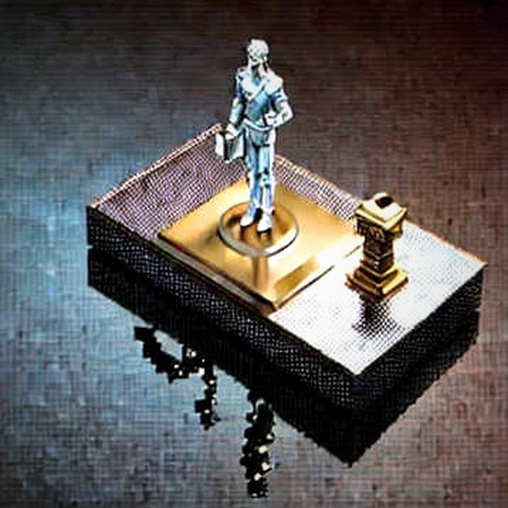
Official Trump Coins, a brand licensed to Donald Trump Jr. and Eric Trump, has been selling silver medallions and now a silver bar. The product is available in two weights, features a full-color design of Trump saluting the American flag, and is framed by the presidential seal and the words 'UNITED WE STAND.' The brand claims exclusivity, leveraging Trump's personal endorsement to drive sales through a direct-to-consumer website and his social media channels.
This is classic celebrity IP monetization, but it is also a fragile stack. The buyer trusts that the silver is genuine, that the design is indeed 'official,' and that the product will retain value. That trust is centralized in the Trump family brand and the manufacturer. There is no transparent, on-chain provenance. No immutable record of creation, ownership, or transfer. The collector is left with a physical bar and a certificate of authenticity—a piece of paper that can be forged as easily as the bar itself.
Core: The Tokenization Alternative—Why Silver Should Live on a Ledger
Imagine the same product as a non-fungible token (NFT) representing a physical silver bar, with a digital twin stored on a blockchain. The token would cryptographically commit the bar's weight, purity, and serial number. A Chainlink oracle could feed the real-time silver spot price into a smart contract, allowing fractional ownership or automated buy/sell orders. The token holder could redeem the physical bar at any time via a trusted custodian, or simply hold the digital asset for liquidity.
This is not science fiction. I have personally audited tokenization platforms that issue ERC-1155 tokens for gold bars, and the technical hurdles are manageable. The key is the oracle: the physical world must be bridged to the chain. Chainlink’s decentralized oracle network can verify the existence of the bar via tamper-proof sensors or third-party audits. But here is the irony: the same Chainlink infrastructure that DeFi relies on for price feeds is also the weak link. Oracle feed latency remains DeFi’s Achilles’ heel, and any tokenization project that leans on a single centralized mint for verification is just a prettier version of the same problem.
Official Trump Coins could have chosen to mint their silver bar as a non-fungible token on a low-cost layer-2 like Optimism or Arbitrum, using a ZK-rollup for privacy if needed. The choice between OP Stack and ZK Stack is not technical—it is about who can convince more projects to deploy chains first. But the Trump brand does not need to convince anyone; it needs to convince its base that the digital representation is as real as the silver. That is a cultural adoption problem, not a technical one.
Contrarian: The Physical Bar Is a Step Backward—and a Warning
Here is the counter-intuitive truth: the physical silver bar is actually a more conservative product than a digital token. It appeals to the traditionalist collector who distrusts 'virtual' money. But that same traditionalist is buying a product whose authenticity relies on a centralized brand—the very system that blockchain was designed to replace. The 'official' claim is a form of centralized authority. If the Trump brand were to be compromised, the silver bar’s value would collapse. An on-chain token, by contrast, retains its provenance regardless of the brand’s reputation.
More importantly, the physical bar is wasteful. It requires mining, shipping, and storage. It cannot be split into fractions. It cannot be traded 24/7 on a global exchange. It is a nostalgic artifact in an era of programmable money. I have seen this pattern before: during the 2017 ICO mania, I declined advisory roles to audit a DAO framework that promised to tokenize real estate. The project failed because the team insisted on a physical certificate of title, creating a legal bottleneck. We code the trust, but we must audit the soul. The soul of this product is its connection to a political figure, not its form factor.
The somber governance reality is that tokenization introduces new risks: smart contract bugs, oracle failures, and regulatory uncertainty. Circle's USDC can freeze any address within 24 hours—how is that decentralized? A tokenized silver bar would face similar custody risks. But the alternative is not a physical bar; it is a system where the user is human and the protocol is neutral. The Trump bar opts for the human trust model, which is exactly the vulnerability that blockchain aims to eliminate.
Takeaway: The Future of Political Memorabilia Is On-Chain, but We Must Be Honest About the Trade-offs
In a world of ledgers, who holds the memory? The silver bar holds memory in alloy and enamel. The blockchain holds memory in code and consensus. The former is romantic; the latter is resilient. Official Trump Coins could have been a case study in bridging the gap—a physical product with a digital twin, verified by a decentralized oracle, tradeable on secondary markets. Instead, it is a reminder that the industry’s greatest challenge is not technology, but the inertia of legacy trust models.
Proof is binary; meaning is fluid. The silver bar will sell to those who find meaning in the salute. The token will sell to those who find meaning in the protocol. The convergence will come when collectors realize that they can have both—but only if they demand the on-chain provenance that makes the physical object truly valuable. Until then, we are not moving money; we are moving belief. And belief, like silver, is heavy.