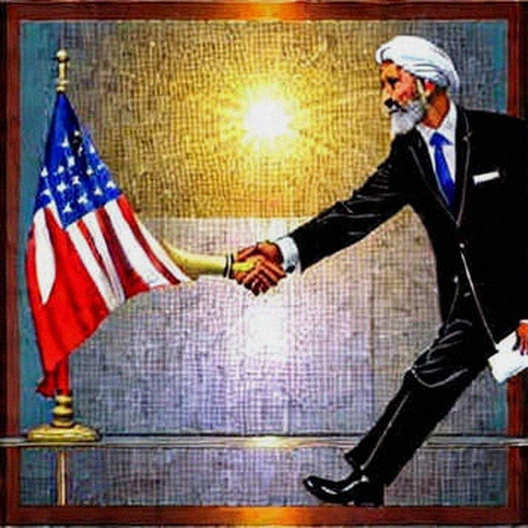
On September 8, Moscow released exactly what it wanted released. A readout describing a phone call between Vladimir Putin and Donald Trump as "constructive and very frank." Ukraine was discussed. Putin, according to presidential aide Yuri Ushakov, pointed out steps the United States could take to accelerate the end of the special military operation. No peace framework. No date for a follow-up. No public acknowledgment that Ukraine was on the call — because it wasn't.
Here is the market version of the same event: nothing happened. The Bitcoin tape didn't gap. Funding stayed flat. Perpetuals went about their sideways business like a bored node waiting for the next block.
That silence is information.
The code doesn't lie, but the narrative does. The narrative said a war-risk premium was evaporating in real time. Two leaders with the capacity to change the order of Eastern Europe held a direct conversation, and the entire crypto complex shrugged. Most traders scrolled past a headline that macro desks have told them for three years would matter. But the absence of a price reaction is not the absence of a trade. It means the market is waiting for something more specific than atmospherics — a deliverable, a date, a sanctions list, a signature.
A "constructive and very frank" readout is a diplomat's null pointer. It allocates no state resources, commits no balance sheet, and binds no future block. When a readout this warm contains this little substance, the distance between the phone call and the order flow is where the actual negotiation is happening.
That stretch of road runs through cryptocurrency — not because Bitcoin is a hedge, but because three years of sanctions turned crypto into Russia's marginal settlement rail, its energy export valve, and, unintentionally, one of the clearest records of how a sanctioned economy actually breathes.
When the invasion began in 2022, the ledger got drafted into the war before the artillery did. Ukraine opened official crypto wallets and pulled in millions in decentralized donations. Western exchanges froze Russian accounts by policy. The Treasury sanctioned Tornado Cash a few months later, coding a mixer as a sanctioned entity and framing the act of writing privacy code as a national security violation. That decision — the treatment of open-source software as an accessory to crime — never stopped haunting the industry, and it is about to collide with something inconvenient.
The collision is structural. Russia was pushed out of SWIFT, cut off from correspondent banking, and capped on oil exports. In response, Moscow did what any engineer would do: it built bypasses. In 2024, the state legalized crypto mining and authorized digital assets for cross-border settlements under a new legal framework. Flagging natural gas that had no export route found a buyer: Bitcoin miners who turned stranded energy into a tradeable global asset. Russian companies that couldn't pay Chinese suppliers through sanctioned banks started moving value through USDT corridors. By 2025, these stablecoin lanes were not a gray experiment. They were part of the country's basic import machinery.
Now a thaw is on the table. And thaws are dangerous for machines that were built to survive the cold.
Let's walk the order flow the way I would walk a contract audit — line by line, stack by stack, looking for where the assumptions break.
Stack One: The Stablecoin Corridor
The ruble-USDT corridor is the quietest large market in crypto. It doesn't show up in exchange volume the way retail expects. It lives on Moscow OTC desks, Dubai brokerages, and informal settlement networks that connect Russian importers to Asian manufacturers. Its price is a premium — the spread between the official ruble rate and the rate you actually pay to turn rubles into digital dollars when no bank will process your transfer.
A sanctioned economy trades at a discount across every asset. The ruble trades at a discount inside the corridor. Stablecoins trade at a premium because they represent liquidity with a way out.
Liquidity is just trust with a timeout.
The premium on that corridor has been the purest measure of sanctions pressure since 2022. Move your eye off the shiny futures contracts and watch that spread: when sanctions bite, the premium widens. When settlement channels open, it compresses.
The first signal to watch now is not a White House statement. It's the traded spread on Russian OTC desks. If Washington and Moscow begin a genuine sanctions unwind — starting with payment infrastructure, which is the most reversible layer of the sanctions stack — the premium compresses quickly. And when it does, capital that migrated into stablecoins out of necessity does not stay out of loyalty. It returns to the formal banking system at the first opportunity. Corridor volume has a half-life, and the half-life starts when the correspondent banks open.
Stack Two: The Miner's Energy Arbitrage
Russia became the world's second-largest Bitcoin mining jurisdiction for a simple reason: energy that couldn't be exported was cheap. Flared associated petroleum gas, surplus hydroelectric capacity in Irkutsk, and industrial electricity priced for domestic consumption gave miners an arbitrage that didn't exist in Texas or Norway.
War made that arbitrage wider. European sanctions closed the pipeline valves. Gas that once flowed to Germany had nowhere to go. Flaring it into the Siberian sky paid no bills. Miners arrived with containers of ASICs and offered oil companies a price for gas that was better than the price of burning it for nothing. That's not ideology. That's thermodynamics meeting economics.
A peace settlement doesn't just stop artillery fire. It reopens pipelines. And the same molecules that today run Bitcoin miners at subsidized domestic tariffs become exportable commodities priced in dollars per million British thermal units. The moment Russian pipeline gas is a tradeable export again, domestic energy policy shifts. Governments stop cross-subsidizing electricity for industrial consumers when they can sell the same gas abroad for hard currency. The cheap power that anchors Russian mining economics starts to evaporate.
This is the trade nobody is talking about: peace is a bearish event for Russian hashrate margins.
Not for Bitcoin's global hashrate — machines migrate, difficulty adjusts every 2016 blocks, and the network doesn't care about geography. But for the specific stack of Russian miners that exists only because of stranded gas and wartime sanctions, a de-escalation is a cost shock.
Stack Three: The OFAC Precedent
Here is where the forensic skepticism matters. Watch how Washington sequences any sanctions relief.
The Treasury's 2022 decision to sanction Tornado Cash turned open-source code into a listed entity. The industry fought it, litigated it, and lost years of clarity over it. But the underlying logic was always political: crypto privacy tools destabilize sanctions enforcement, so they became instruments of a larger security posture.
What happens when the security posture changes?

If the United States begins unwinding sanctions against Russia for geopolitical reasons, it opens a very awkward question: if sanctions are a political tool that can be relaxed when the politics shift, then what exactly was the permanent crime committed by the code that was used to evade them?
The developer that faces prison time in the United States over written code is watching this negotiation from a different angle than the macro trader. If the state demonstrates that sanctions are negotiable, it weakens the moral foundation of every crypto enforcement action built on sanctions logic. The code didn't change. The political temperature did. And the industry's regulatory risk profile — which was never grounded in code, but in narrative — recalibrates instantly.
I debugged bots; now I debug bias. And the bias I see in this market is the assumption that geopolitical thaw is a stable input. It is not. It's a highly volatile function of domestic politics, energy prices, and election calendars.

Putin called at this exact moment because the calendar matters. The U.S. midterm elections are roughly fourteen months out. Trump wants a foreign policy victory he can brand before that deadline. Putin wants sanctions relief before the Russian economy's wartime structure hardens into something unreformable. Their clocks are synchronized even if their goals are not.
And that is why the sideways market is the wrong place to be watching.
Here's the contrarian view everyone is missing.
Retail is splitting into two camps. The first camp says peace is bullish: de-escalation removes tail risk, risk appetite returns, ETF inflows accelerate. The second camp says peace is bearish: if the war narrative was Bitcoin's institutional adoption engine, then peace kills the story.
Both camps are measuring the wrong balance sheet.
The war was never Bitcoin's primary demand driver. It was a sanctions-avoidance accelerant for a specific population: Russian corporates, exchange operators, and gray-market settlement firms. And a peace deal doesn't make that population buy Bitcoin. It makes them sell it.
Think about it in terms of capital preferences. When sanctions unwind, the marginal Russian exporter doesn't rotate into BTC. He rotates back into the formal banking system, dollar clearing, and trade finance. The stablecoin lane that served him for three years becomes a lane he no longer needs. A real thaw is actually an exit-liquidity event for the exact crypto infrastructure that wartime sanctions created.
Static analysis misses the human variable. The human variable here is an oligarch who has spent three years paying 4 percent premiums for digital dollars. Give him a legal wire transfer and he takes it. Peace doesn't expand the crypto left of balance sheet. It contracts it.
The honest reading of the September 8 call is that no one — not the Kremlin, not the White House, not the European chancelleries — has produced a usable deliverable. What exists is a framing exercise. Both sides signaled willingness to discuss the structure of a settlement before settling its terms. That's the diplomatic version of a test transaction: a small, reversible signal designed to see if the counterparty executes honestly.
The crypto market's job now is to watch for the settlement confirmation.
Watch the ruble-USDT corridor premiums, not the headlines. Watch the Brent forward curve for signs that traders are pricing Russian barrels returning to formal markets. Watch the Treasury's sanctions list for the first delisting of a Russian payment institution — not a dramatic removal, but a narrow, quiet technical change that opens a window for correspondent banking. That delisting is the on-chain confirmation of the whole thesis.
I spent 2017 auditing contracts that turned out to be vapor. I spent 2024 tracking institutional wallets through ETF flows. Both taught me the same lesson: confirmations don't come from speeches. They come from the ledger.
Gold rushes leave ghosts in the ledger. The ghost of this one will be a corridor that once traded at a 4 percent premium and then traded flat because the war ended, legally, long before the guns stopped.
Be patient. The trade is still in the mempool.